.svg)
.svg)

10 Signs your internal TA team can't scale hiring - and three ways to increase capacity

Scalable recruitment is the gap most internal TA teams are quietly missing. The average European tech recruiter now carries 14 to 20 open reqs at once, while average TA team headcount has fallen from 31 in 2022 to 24 in 2024, per Gem's 2025 recruiting benchmarks. Those are the operating conditions at most growth-stage TA teams in Europe right now, and the most common reason hiring slows down at scale.
The hard part is naming the moment a team has outgrown its current setup. Push for capacity too early and the CFO pushes back. Wait too long and hiring manager satisfaction tanks while the best recruiters quit. Most TA leaders end up trapped in the middle: the team is visibly stretched, but the language and the numbers to make the case for change are missing.
In this blog, we give you both. 10 diagnostic signs your internal TA team has hit a ceiling, grouped by where the strain usually shows up first, plus a working threshold for when scalable recruitment means changing the setup rather than pushing the team harder. As you read each sign, count how many apply to your team. The total at the end will tell you whether to adjust your current setup or change its shape.
What does scalable recruitment actually mean?
Scalable recruitment is a hiring setup whose capacity can rise and fall with demand without quality dropping, time-to-fill blowing out, or burning out the team. A purely in-house team is "scalable" if you can double hiring next quarter without doubling time-to-fill or halving offer acceptance. Most internal-only setups can't, and that's the difference between talent acquisition and recruiting that gets missed in most board conversations.
In practical terms, scalability shows up in 3 places: the elasticity of your sourcing capacity, the speed at which you can absorb hiring plan changes, and the protection your hiring manager experience holds when volume doubles. A team that holds all three under pressure is rare without external capacity layered in.
Capacity signs (1 to 4): when the math stops working
Capacity signs are the easiest to measure and the easiest to ignore. They show up in your recruiter-to-req ratio, your time-to-fill trend, your sourcing posture, and the workarounds hiring managers start inventing when you can't move fast enough.
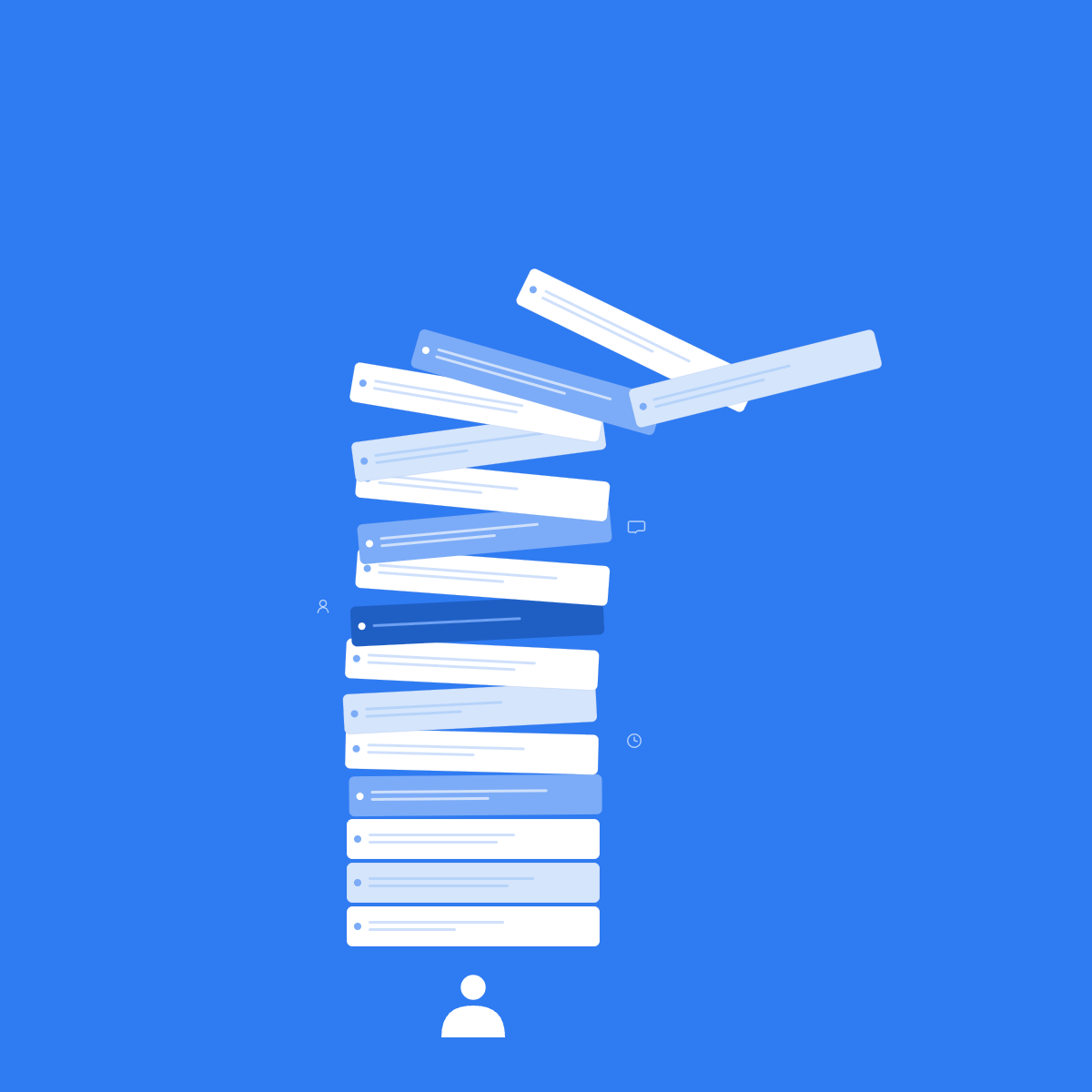
1. One recruiter is carrying more than 15 active reqs. Over half of organisations now have individual recruiters running 20 or more reqs at once, according to SHRM's 2025 benchmarking data. Past 15 active reqs, response times slow, sourcing gets shallow, and your best recruiters burn the calendar trying to keep hiring managers happy. The number is a leading indicator for every other recruiting KPI in your dashboard.
2. Time-to-fill for standard tech roles has crept past 50 days. Average tech time-to-fill now sits at over 52 days globally, and AI, data engineering, and cybersecurity roles routinely exceed 60 days. For European context, France's median is 39 days, and EMEA takes longer to fill than any other major region. If your standard backend or frontend roles are sitting open longer than 50 days, capacity is the most likely cause.
3. Sourcing has become fully reactive. You're sourcing against open reqs, not ahead of them. There's no warm pipeline of candidates you've spoken to in the last 6 months. Every intake meeting starts at zero. This is the clearest leading indicator that capacity is being eaten by execution rather than invested in pipeline.
4. Hiring managers have started running their own searches in parallel. When a hiring manager is DM'ing candidates on LinkedIn before you've sourced your first batch, they've already concluded you can't keep up. They're rarely wrong about the symptom, even if they misdiagnose the cause.
Process signs (5 to 7): when the operation starts to leak
Process signs show up in candidate experience metrics before they show up in hiring metrics. These are the ones that quietly cost you offers you should have won.
5. Candidates wait more than 5 business days between stages. A 5-day gap between interview stages is the upper edge of what most candidates in a hot market will absorb without disengaging. Past that, your offer acceptance rate starts sliding even when the offer is competitive. Scheduling delays usually trace back to recruiter workload.
6. Offer acceptance has slipped below 80 percent. A drop from 90 to 75 percent usually means your process took too long, your hiring manager wasn't selling at the offer stage, or your candidates had time to take a competing process across the line first.
7. Pass-through rates aren't measured, or aren't trusted. If you can't say how many candidates move from screen to first-round, or first-round to onsite, your team is running on instinct. When capacity is tight, instinct is what gets sacrificed first. 60 percent of companies saw time-to-hire rise in 2024, and most can't pinpoint which stage in their funnel slowed down.
People signs (8 to 9): when the team itself is the bottleneck
Strain on the team is the hardest signal to surface because the symptoms look personal. The pattern underneath is load shedding showing up in the people doing the work.
8. A recruiter has left in the last 6 months and the role is still open. Almost three quarters of recruiters now report meaningful burnout, and recruitment has one of the highest attrition rates of any function. If you've already lost someone and you can't backfill them inside 3 months, your hiring plan is now structurally under-resourced for as long as the gap lasts.
9. You can't hire recruiters fast enough to keep up with hiring plan changes. Recruiters take 3 to 6 months to source, hire, and ramp. If your hiring plan moves quarterly and your recruiter capacity moves half-yearly, you're permanently chasing demand. By the time you've hired the recruiter to close the gap, the gap has already moved.
Strategic sign (10): when hire quality starts to drift
Quality of hire is the metric most TA leaders now rank as most important, and the one most likely to slip silently when capacity is stretched. The early warning isn't in your retention data, which lags by 12 months. It's in your hiring managers.
10. Hiring manager satisfaction has dropped, or you've stopped measuring it. Hiring manager satisfaction is the strongest available proxy for new hire performance. When it slips, it's usually because the recruiter didn't have time to do thorough calibration, or pushed candidates through to keep the funnel moving. Without that measurement in place, the slip still happens, and you only spot it when retention numbers land 12 months later.
How many signs mean it's time to rethink your scalable recruitment setup?
4 or more is the working threshold. Tick 3 or fewer and you can usually tighten the existing operation with sharper intake meetings and a quarterly sourcing sprint. Tick 4 or more and the shape itself is mis-sized for the demand. TIER Mobility hit this point during their growth phase and ticked six, then ran an embedded recruiter model that delivered 28 hires across engineering, product, design, and commercial, peaking at 5 to 6 hires per month.
Three ways to add scalable recruitment capacity
Once you've crossed the threshold, the question is which mix gets you to your next milestone. There are three real options.
Hire more in-house. The most durable and the slowest. A senior recruiter takes 3 to 6 months to source, hire, and ramp, plus a management layer once you go past 5 reqs each. Cost-per-recruiter sits in the EUR 80k to 130k base range across most European tech hubs, before bonus and tooling. Best when your hiring plan is stable and you can absorb the lag.
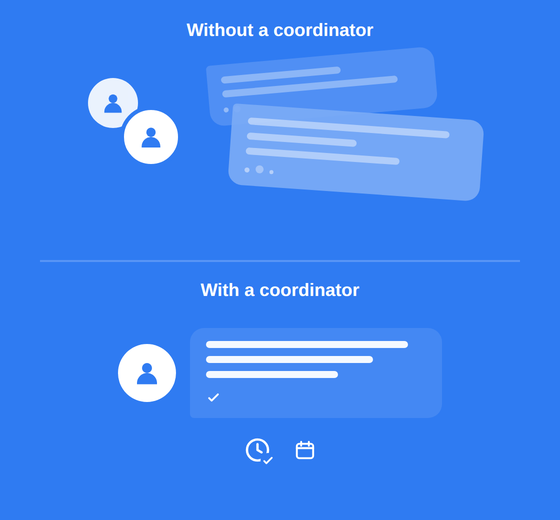
A faster move inside the in-house option is adding a talent coordinator rather than a second recruiter. A coordinator handles scheduling, candidate communications, ATS hygiene, and offer logistics, which typically frees up 30 to 40 percent of a recruiter's calendar. Coordinator base sits around EUR 35k to 55k in European hubs, and they ramp in weeks rather than months. You can bring one in temporarily through an embedded model while you decide whether the workload supports a permanent hire, or go straight to a permanent coordinator if your hiring plan is steady.
Traditional RPO. Multi-year contracts, off-site recruiters, integrated tooling. Strong on volume, weaker on integration with your hiring managers' day-to-day. Often a poor fit for product-led companies where calibration is high-context and changes weekly.
Embedded recruiting. A recruiter joins your team for a defined period and works inside your ATS, your intake meetings, and your Slack channels under your brand. You scale up and down monthly. It's the model gaining the most share with fast-changing tech companies right now, because it closes the capacity gap without the integration cost of an external agency or the ramp cost of fresh in-house hires. Most embedded recruiters are productive in week 1 because they're recruiters by background, and they share the same metrics and hiring manager relationships your internal team already operates against.
What to do next
If you've ticked 4 or more of these signs, you've outgrown your current setup. That's worth saying out loud to your CHRO before it becomes a quality-of-hire conversation 6 months from now. Three takeaways to leave with:
- Capacity ceilings are structural. Sizing the function for actual demand is the only durable fix.
- 4 or more signs means the shape of the function is mis-sized for current demand.
- The decision is about which mix gets you to your next milestone without breaking what's already working.
Before you take any of this to your CFO, get your own numbers. Run your team through the Tribe TA capacity calculator to see where the gap sits at your organisation. If option C looks like the right fit, here's how embedded recruiting works at Tribe: regional recruiters in your team, flat monthly subscription, no lock-ins, no hidden fees.
FAQ
What is scalable recruitment, and how is it different from in-house recruiting?
Scalable recruitment is a hiring setup whose capacity can rise and fall with demand without quality dropping or time-to-fill blowing out. In-house recruiting is one delivery model inside that setup. A purely in-house team can be scalable if it's resourced for peak demand, though most aren't because CFOs rarely fund permanent headcount for hiring spikes.
How many open reqs can one recruiter realistically handle before quality drops?
The data suggests 15 is the upper edge for full-cycle tech recruiting. Past that, response times slow and sourcing gets shallow. SHRM's 2025 benchmarks show over half of recruiters now run 20 or more reqs at once, which is why time-to-hire has been climbing at most companies.
What's a realistic time-to-fill benchmark for tech roles in Europe in 2026?
Standard tech roles average 52 days globally and longer in EMEA. Specialist roles in AI, data engineering, and cybersecurity routinely cross 60 days. France's median sits at 39 days. If your time-to-fill is materially above that, capacity is the most likely cause.
Is it cheaper to scale an internal TA team or to use embedded recruiting?
It depends on how stable your hiring plan is. Internal hires cost EUR 80k to 130k base each in most European tech hubs and take 3 to 6 months to ramp. Embedded recruiting carries a higher monthly cost but no recruitment fee, no severance risk, and no ramp lag. For volatile hiring plans, embedded is usually the cheaper total cost.
How fast can embedded recruiters integrate into an existing internal TA team?
Most embedded recruiters are productive in week 1 because they're recruiters by background. Full integration into your ATS, intake rhythm, and hiring manager relationships usually takes 2 to 3 weeks. The model assumes they work as peers to your internal team rather than a parallel function.
You Might Enjoy
.jpg)

.svg)

.svg)




.svg)
.svg)

.svg)
.svg)


Check our FAQs
.svg)