.svg)
.svg)

Is embedded recruiting really an alternative to expensive recruiting agencies?
.jpg)
TL;DR: I think embedded recruiting is the stronger option for any company that hires steadily. European agencies charge 18 to 22% of first-year salary for tech roles, which comes to €16,120 on Ravio's median salary for a mid-level Berlin engineer. We charge up to €13,000 a month for a specialist embedded recruiter, so even at our highest tier once your recruiter closes one hire a month, you pay less per hire than you would an agency. For retained executive search or a one-off hire, I'd still go to an agency.
If you hire more than one person a month, I think embedded recruiting will serve you better than a recruitment agency, both on cost and on the quality of the people you hire. And with contingency recruitment agencies taking a percentage of every new hire's salary, your recruiting bill grows every time you add a role to the hiring plan. An embedded recruiter costs you the same each month whether they close two roles or five.
Our recruiters work inside the hiring teams of companies including Wolt, Aleph Alpha, Circula and Leapsome. Circula brought us in partly to cut its reliance on external agencies so we've seen both models working inside the same hiring team.
What is embedded recruiting, and how is it different from a recruiting agency?
With embedded recruiting, you bring external recruiters into your talent acquisition team. They work in your tools and alongside your in-house team, and speak to candidates as part of your company, and you pay a monthly fee for their time. A recruitment agency works from outside your company and charges a placement fee, usually a percentage of the hire's first-year salary, when one of its candidates accepts your offer.
Part of the difference comes down to how each one gets paid. Agency recruiters earn their fee when their candidate signs, so they put their hours into the roles most likely to close, and I don't hold that against them, because that's what the model pays for. Nobody at the agency gets paid to rewrite a weak brief with your hiring manager or to build a pipeline for next quarter's roles. When you par for a recruiter's whole month through embedded though, that work become part of the job. Consulting with hiring managers and mapping market data allows embedded recruiters to predict any challenges your company might face filling a role, and helps you to address the challenge before the role sits open for months.
The other part has nothing to do with money. An embedded recruiter spends their working week inside your company. They join your stand-ups, hear how your engineers talk about the product and learn what the job is like after the first few months. When a candidate asks what it's like to work with you, your embedded recruiter can answer as someone on the team, and I think candidates can tell the difference between that answer and a pitch built from a job description.
How much does a recruitment agency cost compared with embedded recruiting?
European agencies charge 18 to 22% of first-year salary for most tech roles, which comes to €16,120 on the median mid-level software engineer salary in Berlin. We charge €11,000 to €13,000 per month for an embedded recruiter. depending on region. Once your embedded recruiter closes one role per month, embedded recruiting costs you less per hire than an agency.
Agency fees across Europe
Recruitly's 2026 guide to agency fees puts UK permanent fees for technology roles at 18 to 22%. GoHire's comparison of agency fees by country puts Germany higher, at 20 to 35%, with agencies charging the top of that range for specialist and executive roles. Ravio's 2026 Berlin salary benchmarks set the median mid-level software engineer at €80,600, and a 20% fee on that salary is €16,120.
What the same budget pays for in an embedded model
You can see Tribe's monthly rates for embedded recruiters on our pricing page. We charge up to €13,000 per month for an embedded local recruiter in the UK and Ireland, DACH, Benelux, the Nordics and CEE, and up to €11,000 in Southern Europe. We include intake and our proprietary recruiting tool in that price, and you can scale the engagement up or down month to month with no setup fee.
At Wolt, our recruiters have closed an average of 3 to 5 hires per month each, and across more than 4,300 hires at Wolt out average cost per hire came to €3,300. That's roughly a fifth of one agency fee on a Berlin engineer.
I wouldn't expect every company to match that. Wolt hired at very high volume across many types of roles, and if you're only hiring senior engineers, your recruiter might close fewer roles each month. You don't need Wolt's volume for the numbers to work, though. A month of an embedded recruiter costs less that a single agency fee on a Berlin engineer, so once your recruiter starts making hires, you're already paying less than you would through an agency.
Where the quality difference comes from
I think embedded recruiting gets you better hires, and more of them. I might be biased, but the evidence is there to back up my opinion. An embedded recruiter works across every open role on your plan, including the hard-to-fill ones that a contingency agency has less reason to prioritise.
Agencies usually guearantee a placement for three to six months, according to Optima Europe's 2026 guide to European agency fees. If your hire leaves after that window, you pay for a new search and a new fee. Our recruiters are still in your team in month seven. They know which hires settled in and which didn't, and they change the brief for the next role accordingly.
You can see this early on in the offer acceptance data. Gem's 2025 recruiting benchmarks put average offer acceptance at 84% in 2024. Our recruiters reached 93% offer acceptance across 41 hires at Leapsome, and at Circula candidates accepted 94% off the offers we made across 96 hires.
I think continuity has a lot to do with this success. If the recruiter who runs a candidate's first call has also been in the hiring manager's intake, getting the hiring manager feedback throughout the process, and knows the true salary and benefits package, the candidate reaches the offer stage with very few surprises.
What being embedded does for your employer brand
Embedded recruiters work inside your in-house technology, they're in your Slack, join your stand-ups, and run every role through your ATS. They write to candidates as part of your team, so every candidate hears one consistent account of your company fromt he first message to the offer. For your employer brand, I think that matters more than anything on your careers page, because candidates hear about you from someone who works alongside your hiring managers every day.
The same continuity works in the other direction. Your embedded recruiter stays with your team after a hire closes, so they can tell you what is and isn't working. They hear why candidates turn down offers and what candidates have already heard about your company before the first call, and they bring that back to your hiring managers. If your reputations in a particular market is costing you hires, your recruiter will usually be the first person to know.
Aleph Alpha, the Heidelberg AI company, brought in three of our recruiters after its Series B funding round, one recruiter each for product, engineering, and customer-facing roles. The team had relied almost entirely on inbound applications, and our recruiters moved it to a sourcing-led model. Tribe recruiters made 30% of all new hires while the company grew from 150 to 320 people in 10 months, working with the internal head of talent acquisition on strategy.
How sourcers and coordinators support embedded recruiting in end-to-end hiring
In end-to-end hiring, embedded recruiters own each role from intake to offer, while embedded sourcers build outbound pipelines and coordinators run interview scheduling and candidate communication. Splitting the work this way keeps your recruiters on the conversations with hiring managers and candidates that only they can have.
Gem's benchmarks show the average recruiter now manages 14 open requisitions at once. Gem also found that a sourced candidate is five times more likely to be hired than an inbound applicant, so we pair recruiters with embedded sourcing whenever your pipeline runs thin.
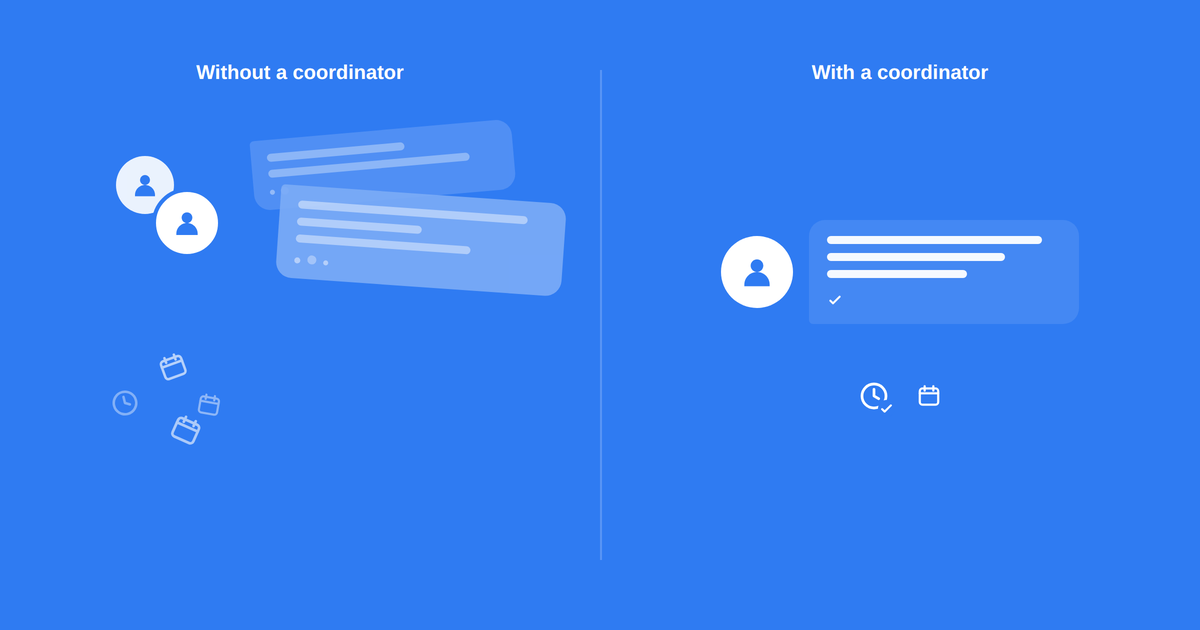
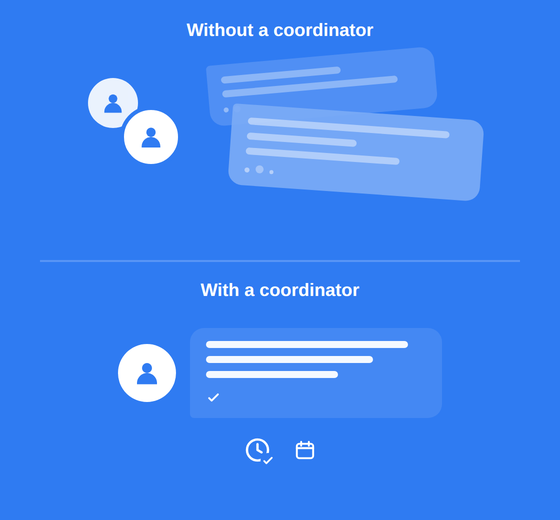
Recruiting coordinators give you in-house recruiting support for the scheduling work that slows hiring down. Cronofy surveyed 12,000 candidates in seven countries, and 31% said their first interview took two to three weeks to schedule. When we added eight talent coordinators at Wolt in March 2023, they scheduled more than 100 interviews per week and Wolt cut its time to hire by around 25%.
How to scale your talent acquisition team through recruiting spikes
Startups hire in bursts. They hire hard after a funding round or a market launch, then slow down for a quarter or two. Over the same period, companies have cut their permanent recruiting teams: Gem found the average team shrank from 31 people in 2022 to 24 in 2024, even though hiring grew again that year.
Permanent headcount is often the wrong answer to a recruiting spike. If you hire permanent recruiters for a spike, it takes you months and they stay on your payroll after the spike ends, and if you send the roles to agencies, you pay a fee on every hire made during it. With flexible recruitment services such as embedded recruiting, you add recruiters for as long as the spike lasts and release them when it ends. We've written separately about the signs your TA team can't scale hiring any further.
When is a recruitment agency still the better choice?
Recruitment agencies still have a place in scalable talent acquisition - especially for retained executive search, or for a one-off specialist hire in a market you don't normally recruit in. In both cases you only pay for the hire, and the agency already knows candidates that your embedded recruiter would have to find from scratch.
If you hire fewer than one person per month, and agency will usually cost you less too. At that volume, an embedded recruiter would spend part of each month with no open role to work on. During temporary gaps they may work on market mapping or strategy consulting for you, but if that is your typical hiring cadence, an agency might be a better fit.
So is embedded recruiting a real alternative to recruitment agencies?
Yes. If you're hiring a role a month or more, embedded recruiting is the better choice. It costs you less per hire at that volume, and you keep the pipeline and the candidate relationships when the engagement ends.
Our TA Capacity Calculator works out how many recruiters your hiring plan needs, which tells you which side of the break-even point you're on. Our embedded recruiting page explains how we put a recruiter into your team within one to two weeks.
FAQ
Is embedded recruiting cheaper than an recruitment agency?
Yes, once you hire for at least one role per month. European agencies charge 18% up to 35% of first-year salary for most tech roles, about €16,000 for a mid-level engineer in Berlin. Tribe charges up to €13,000 per month for an embedded recruiter who works across all your open roles. Below one hire per month, an agency usually costs less.
How quickly can an embedded recruiter start?
Tribe recruiters typically go live within one to two weeks. Int he first week they run intake, set up scorecards, get access to your tools and build the pipeline, and they start sourcing for your roles immediately.
What is the difference between embedded recruiting and RPO?
In recruitment process outsourcing, a company usually hands a large share of its hiring to an external provider, often on a long contract. In embedded recruiting, recruiters join your existing talent acquisition team and work in your tools and process, on a month-to-month basis you can scale up or down.
Is embedded recruiting a good fit for startups?
For startup recruiting, embedded recruiting suits companies with a funded hiring plan and steady volume. If your startup makes two or three hires a pear, you'll usually fet better value from an agency or from your founders' own networks. Once you're ready to grow headcount though, embedded talent acquisition is a great option to support or even start your internal recruiting function.
Do embedded recruiters work under our employer brand?
Yes. Embedded recruiters contact candidates as members of your team and run every role through your ATS and interview process, so candidates deal with one company from first contact to offer.
You Might Enjoy


.svg)

.svg)






.svg)
.svg)

.svg)
.svg)


Check our FAQs
.svg)